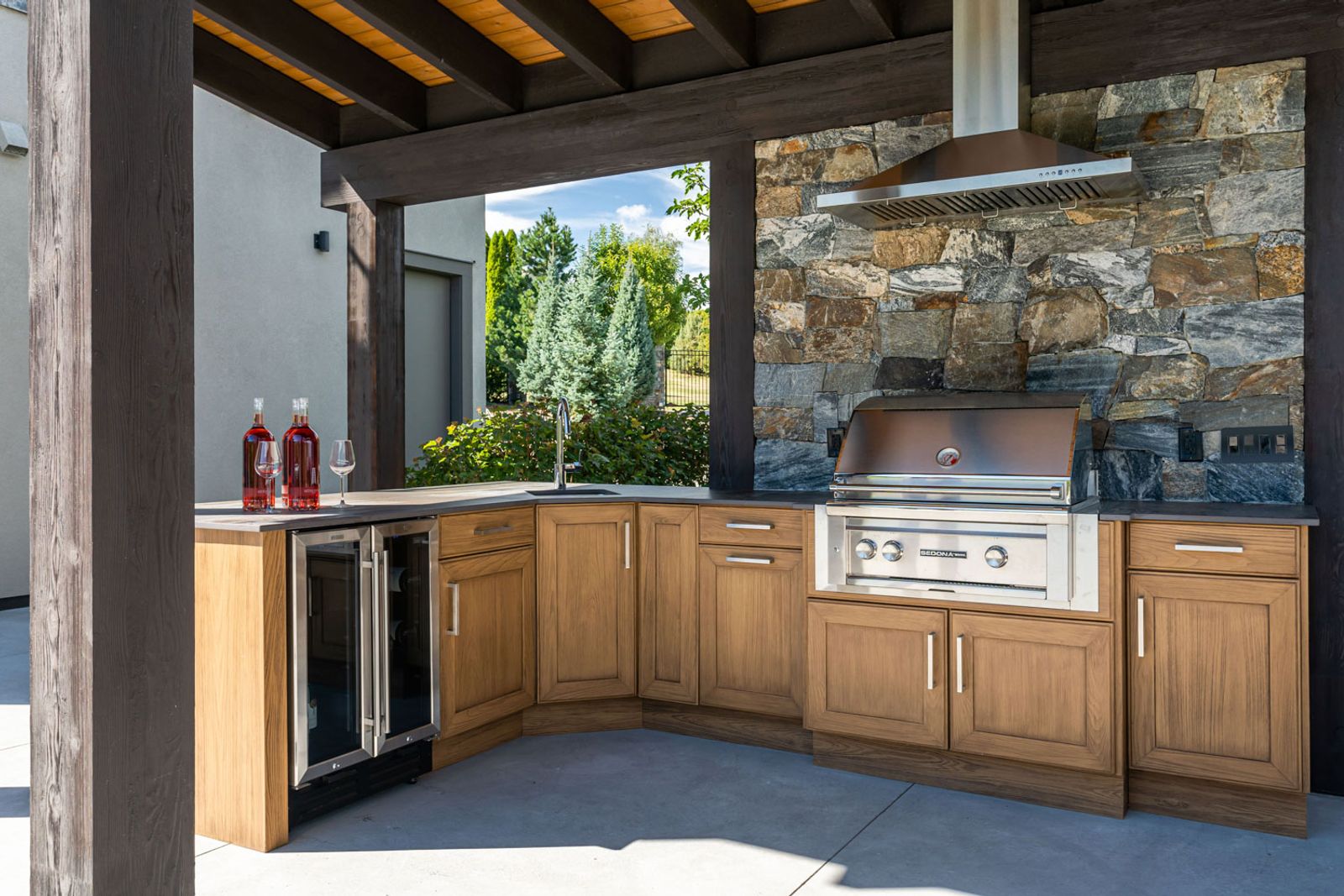
Designing an outdoor kitchen is about far more than selecting a cabinet style or finish. Behind every beautiful space is a series of material decisions that influence how the kitchen will look, feel, and perform for years to come.
Unlike interior cabinetry, outdoor kitchens are exposed to sun, moisture, changing temperatures, and everyday wear. The materials you choose must not only complement your design vision, but also withstand the demands of the environment they'll live in.
Today, homeowners have more choices than ever, from stainless steel and HDPE polymers to natural wood, masonry, and high-density resin. Each offers unique advantages, and each comes with considerations depending on your priorities, aesthetic preferences, and climate.
Understanding these differences is the first step toward creating an outdoor kitchen that feels as beautiful years from now as it does on installation day.
What Makes a Great Outdoor Cabinet Material?
Before comparing materials, it helps to understand what they're being asked to do.
Outdoor cabinetry should withstand constant exposure to the elements while maintaining its appearance and functionality over time. The best-performing materials strike a balance between several important qualities:
- Durability in outdoor environments
- Resistance to moisture, UV exposure, and seasonal temperature changes
- Long-term aesthetic appeal
- Maintenance requirements
- Design flexibility and customization
- Comfort and everyday usability
Rather than asking, "Which material is best?" it's often more helpful to ask, "Which material is best suited to this project?" That answer depends on the home's architecture, the local climate, and the expectations of the homeowner.
Stainless Steel
For decades, stainless steel has been one of the most recognizable materials in outdoor kitchens. Its clean, contemporary appearance, structural strength, and fire resistance have made it a popular choice, particularly in commercial-inspired designs.
Stainless steel performs well outdoors, but there are important distinctions. Not all stainless steel is created equal. While 304 stainless steel is suitable for many inland environments, coastal projects generally benefit from marine-grade 316 stainless, which offers significantly greater corrosion resistance.
Advantages
- Durable and structurally strong
- Modern aesthetic
- Fire resistant
- Hygienic and easy to clean
- Modular construction
Considerations
- Can become very hot or cold depending on the weather
- Fingerprints and surface scratches are often visible
- Lower-gauge products may dent more easily
- Coastal projects require careful material selection
- Doors and drawers can have a more metallic feel and sound during operation
Best suited for homeowners seeking a contemporary aesthetic or commercial-style outdoor kitchen.
HDPE (High-Density Polyethylene)
HDPE is a marine-grade polymer that has become a well-established material in outdoor cabinetry thanks to its excellent weather resistance and low maintenance requirements.
Because it doesn't absorb moisture, HDPE won't rot or warp, making it particularly effective in humid climates. It also features colour-through construction, helping disguise everyday scratches.
One of its primary considerations, however, is thermal movement. HDPE naturally expands and contracts more than many other materials, which designers must account for during fabrication and installation. It also offers a more limited selection of colours and design aesthetics than some alternative materials.
Advantages
- Excellent weather resistance
- Low maintenance
- Moisture resistant
- Colour-through material helps conceal scratches
- Lightweight
Considerations
- Thermal expansion and contraction
- Limited colour and finish selection
- Requires insulated jackets around grills
- Modern aesthetic may not suit every architectural style
Natural Wood
Few materials match the warmth and authenticity of real wood. For many homeowners, it's the benchmark against which every other outdoor material is judged.
Outdoors, however, wood requires ongoing care. Exposure to moisture, sunlight, and changing humidity causes it to expand, contract, grey, and weather naturally over time. Regular maintenance, including sealing, refinishing, or oiling, is necessary to preserve its original appearance.
Advantages
- Rich natural beauty
- Warm tactile feel
- Easily customized
- Premium appearance
Considerations
- High maintenance
- Susceptible to movement, rot, and insects
- Colour changes over time
- Requires periodic refinishing
Wood is often chosen by homeowners who appreciate its natural aging process and are willing to maintain it accordingly.
Accoya
Accoya offers an interesting middle ground between traditional wood and engineered materials. Through a process called acetylation, the wood becomes significantly more dimensionally stable and resistant to rot and insects than untreated lumber.
While Accoya dramatically improves durability, it still behaves like wood in one important respect: the finish will naturally weather over time unless maintained.
Advantages
- Greater dimensional stability than traditional wood
- Improved resistance to moisture and insects
- Easy to fabricate and customize
- FSC-certified
Considerations
- Requires maintenance to preserve appearance
- Limited to the character of pine
- Requires insulated grill jackets
Masonry
Stone, brick, and stucco outdoor kitchens have long been a staple of outdoor living, particularly in custom luxury homes.
Their permanence creates a sense of architectural solidity, and they perform exceptionally well in demanding environments. At the same time, masonry is one of the least flexible systems once installed both functionally and aesthetically. Modifying appliance layouts or adding storage later can be difficult, and installation often requires coordination among multiple trades.
Advantages
- Extremely durable
- Fire resistant
- Long lifespan
- Architectural presence
Considerations
- Labour intensive
- Difficult to modify after installation
- Limited integrated storage
- Requires substantial structural support
High-Density Polyurethane Resin
Among today's outdoor cabinetry materials, high-density polyurethane resin offers one of the most compelling balances of design flexibility, durability, and long-term performance. While polyurethane has long been valued for its strength and versatility, NatureKast has pioneered its use in luxury outdoor cabinetry, reimagining the material to capture the beauty of handcrafted wood while delivering the weather resistance outdoor living demands.
Unlike natural wood, high-density polyurethane resin won't warp, crack, rot, or corrode when exposed to changing weather conditions. It also remains comfortable to the touch in both hot and cool climates, making it as enjoyable to use as it is beautiful to look at.
What truly sets NatureKast apart is how the material is brought to life. Every Signature Collection door, drawer front, and moulding is cast from real oak, cypress, and teak originals, faithfully preserving the grain, texture, and character of natural wood. Each piece is then individually hand-finished by artisans, creating cabinetry that delivers the warmth and authenticity of fine interior cabinetry without the ongoing maintenance traditionally associated with wood.
The result is a material that allows designers and homeowners to achieve virtually any aesthetic, from traditional to contemporary, without compromising on long-term outdoor performance.
Advantages
- Exceptional weather resistance
- Authentically replicates the look and feel of real wood
- Hand-finished for depth and realism
- Will not warp, crack, rot, or corrode
- Comfortable thermal feel in both hot and cool climates
- Low maintenance
- Extensive range of finishes, wood grains, and door styles
- Easily fabricated and customized for bespoke designs
Considerations
- Requires structural cabinet construction behind decorative components
- Requires insulated grill jackets around heat-producing appliances
- Some component sizes are limited by the casting process
For homeowners seeking luxury outdoor cabinetry that offers the warmth of wood without the maintenance, NatureKast's proprietary approach to high-density polyurethane resin provides a unique combination of craftsmanship, performance, and design freedom that is unmatched in the outdoor cabinetry industry.
Beauty and Performance Should Never Be a Compromise
Outdoor kitchens are long-term investments, and the cabinetry you choose will shape not only how the space looks on installation day, but how it performs for decades to come.
At NatureKast, we've always believed exceptional outdoor cabinetry should never require homeowners to choose between timeless design and lasting performance. That's why we pioneered a unique approach to high-density polyurethane resin, combining advanced engineering with artisan craftsmanship to create cabinetry that looks and feels remarkably like real wood while standing up to the demands of outdoor living.
Inspired by fine interior cabinetry, every NatureKast collection is thoughtfully designed to deliver architectural beauty, exceptional durability, and the freedom to create truly custom outdoor spaces. From traditional estates to contemporary retreats, our cabinetry is built to preserve your original design vision season after season.
Because the best outdoor kitchens aren't simply designed for today, they're designed to look just as beautiful for years to come.
Bring Your Vision to Life
Every outdoor kitchen begins with a vision. Whether you're inspired by the warmth of natural wood or the clean lines of contemporary design, NatureKast cabinetry is designed to help bring that vision to life, without compromising on performance.
Explore our collections to discover weatherproof cabinetry crafted for beautiful outdoor living.