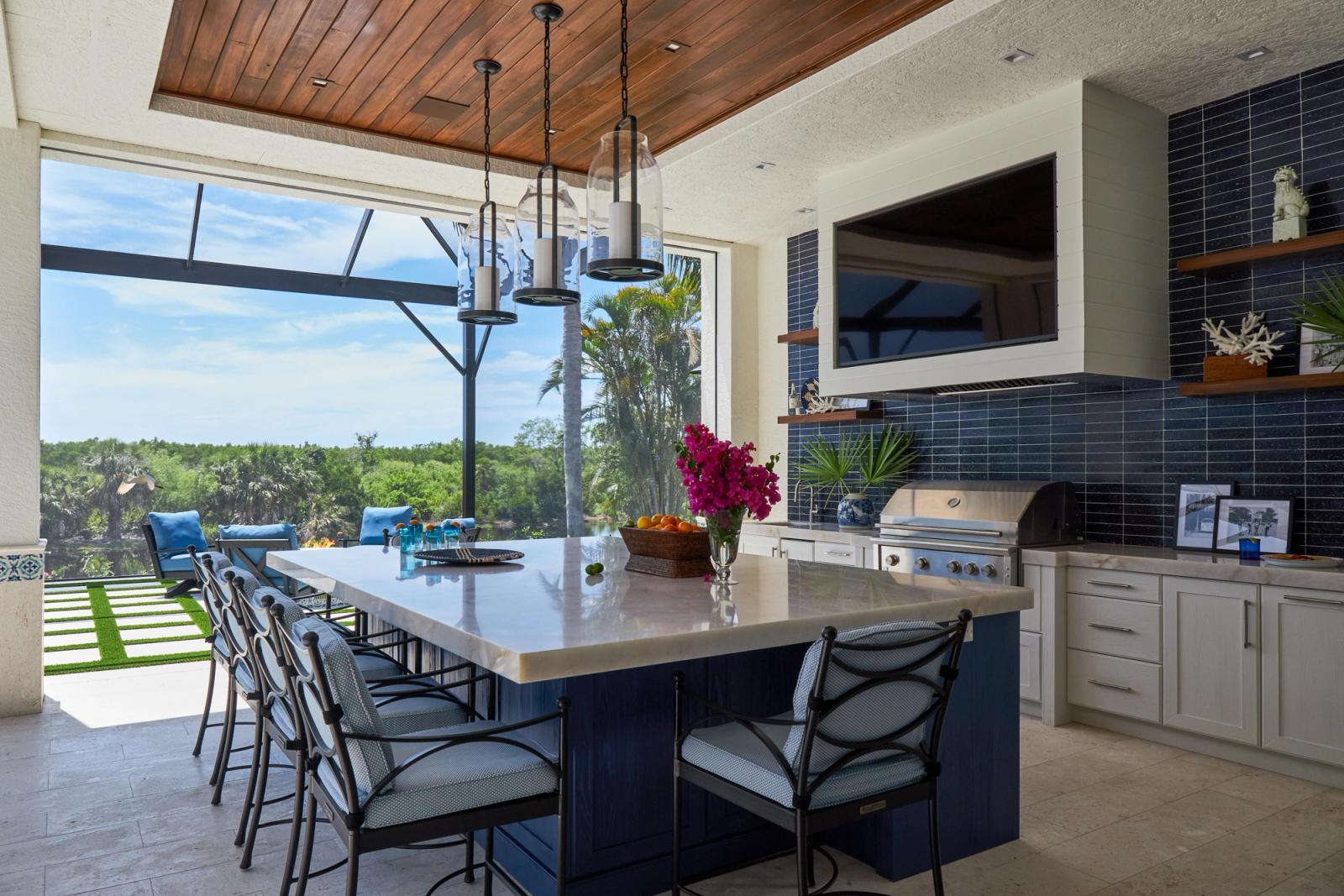
Outdoor kitchens have evolved far beyond a standalone grill on the patio. Today, they are thoughtfully designed living spaces that seamlessly extend the home outdoors, complete with custom cabinetry, premium appliances, and dedicated areas for cooking, dining, and gathering.
As homeowners continue investing in outdoor living, expectations have changed. These spaces are no longer designed to simply withstand the elements; they're expected to feel every bit as refined and functional as the kitchens inside the home.
Creating a beautiful outdoor kitchen, however, is only part of the equation.
The most successful outdoor spaces aren't just impressive on installation day. They continue to look and perform beautifully years later, preserving the original design vision through changing seasons, everyday use, and constant exposure to the elements.
Achieving that balance begins with understanding one of the most influential, but often overlooked, parts of the design process: climate.
Great Outdoor Design Starts with Understanding the Environment
Every climate region faces different challenges when it comes to outdoor kitchens.
A coastal retreat overlooking the ocean faces very different challenges than a covered pavilion in the Rocky Mountains or a shaded backyard in Southern Ontario. Intense sunlight, humidity, salt air, seasonal temperature swings, snowfall, and prevailing winds all influence how materials will age over time.
Rather than viewing these conditions as obstacles, experienced designers consider them early in the planning process. They understand that preserving a space's beauty depends just as much on choosing the right materials as it does on selecting the right finishes, colours, or layout.
When climate becomes part of the design conversation from the beginning, homeowners are far more likely to enjoy an outdoor kitchen that continues to reflect the original vision for years to come.

Designing for the Sun
Sunlight is one of the defining characteristics of outdoor living, but it can also be one of the most demanding.
Constant UV exposure gradually breaks down many finishes, causing fading, discolouration, and surface deterioration. Dark materials often absorb more heat, making cabinetry and countertops uncomfortable to touch during the hottest parts of the day, while highly reflective surfaces can create unwanted glare around cooking and seating areas.
Thoughtful design helps mitigate these challenges. Considering the kitchen's orientation, incorporating shade structures where appropriate, and selecting UV-stable materials all contribute to preserving both comfort and appearance over time.
The goal isn't simply to resist the sun, it's to ensure the colours, textures, and craftsmanship that made the space beautiful in the first place continue to look just as intentional years later.

Designing for Moisture
Whether it comes from humidity, rain, snow, or morning dew, moisture is an unavoidable part of designing for the outdoors.
Over time, materials that absorb water can swell, warp, crack, or develop mould and mildew. Even in relatively dry climates, poor drainage or prolonged exposure to standing water can shorten the lifespan of finishes, cabinetry, and hardware.
Good outdoor design considers moisture from multiple angles. Proper site grading, ventilation, drainage, and carefully selected materials all work together to help maintain the integrity of the space.
When moisture is managed well, homeowners spend less time worrying about maintenance and more time enjoying the outdoor kitchen as it was intended.

Designing for Seasonal Change
Unlike interiors, outdoor kitchens are subject to the seasons.
As temperatures rise and fall, many materials naturally expand and contract. Over time, that movement can affect door alignment, drawer operation, joints, and the crisp detailing that gives luxury cabinetry its refined appearance.
Designing with seasonal movement in mind means allowing materials the flexibility to respond to changing conditions while maintaining their structural integrity. It also means paying close attention to installation details, hardware quality, and the way different materials interact with one another.
The result is an outdoor kitchen that continues to feel well-crafted long after the excitement of installation has passed.
Designing for Coastal Environments
Coastal settings offer some of the most spectacular backdrops for outdoor living, but they also create one of the harshest environments for building materials.
Salt carried through the air accelerates corrosion, affecting everything from cabinet hardware and fasteners to appliances and decorative finishes. Even homes located well inland from the shoreline can experience the effects of salt-laden air.
Designing for coastal conditions requires careful specification of corrosion-resistant hardware, thoughtful material selection, and detailing that promotes drainage and minimizes moisture retention.
These decisions may seem small during the planning process, but they play an important role in preserving the overall quality and appearance of the finished space.

Designing for Winter
For homeowners in northern climates, outdoor kitchens experience another layer of complexity.
Freeze-thaw cycles repeatedly introduce moisture into tiny surface openings before expanding as temperatures drop. Over time, this natural process can damage materials that aren't suited to outdoor conditions.
Designers can help protect against these seasonal stresses by selecting low-absorption materials, encouraging proper drainage, and considering details such as protective covers or overhead structures where appropriate.
Rather than limiting outdoor living, designing with winter in mind helps ensure the investment remains ready for years of enjoyment through every season.

Beautiful Outdoor Kitchens Are Designed as Complete Living Spaces
While material selection is essential, exceptional outdoor kitchens are about much more than choosing products that perform well outside.
The most successful spaces are carefully planned around how people gather and entertain. They consider circulation, sightlines, appliance placement, lighting, seating, and the relationship between the indoor and outdoor spaces of the home.
Material palettes are selected to complement the architecture rather than compete with it. Cabinetry feels like a natural extension of the interior. Lighting creates atmosphere long after the sun sets. Every decision contributes to an outdoor space that feels cohesive, comfortable, and inviting.
When these elements work together, outdoor kitchens become true extensions of the home, not simply places to cook, but places where everyday moments and lasting memories unfold.
Where Beauty and Performance Come Together
Designing for climate doesn't mean compromising your vision. In fact, the opposite is true.
The most enduring outdoor kitchens are those where aesthetics and performance are considered together from the very beginning. Selecting materials for both environmental performance and to complement the home's architecture helps ensure lasting beauty for years to come.
At NatureKast, this philosophy has guided every collection we create. Inspired by fine interior cabinetry, our weatherproof cabinetry is handcrafted to capture the warmth and authenticity of natural wood while being engineered to withstand the environmental demands of outdoor living. The result is the freedom to design outdoor spaces that feel timeless, sophisticated, and built to last.
Ready to Design an Outdoor Kitchen That Lasts?
Whether you're beginning a new build or planning a backyard renovation, thoughtful design and carefully selected materials lay the foundation for an outdoor kitchen that will remain beautiful for years to come.
Explore our collections or connect with a NatureKast dealer to begin bringing your vision to life.